Spirulina is one of the oldest life forms on Earth and one of the most nutrient-dense foods available today. This blue-green algae has sustained ancient civilizations and is now being studied for its remarkable health benefits.
NASA even includes spirulina in astronauts' diets for space missions. Let's explore why this vibrant superfood deserves a place in your daily routine.
What Is Spirulina?
Spirulina is a type of cyanobacteria (blue-green algae) that grows in alkaline lakes and warm fresh water. Two main species are used for human consumption:
- Spirulina platensis (Arthrospira platensis)
- Spirulina maxima (Arthrospira maxima)
Historical Use
- Aztecs: Harvested from Lake Texcoco in Mexico since the 16th century
- Kanembu people: In Chad, Africa, have harvested spirulina for centuries
- Modern cultivation: Grown in controlled environments worldwide
Why It's Special
Nutritional Density:
- 60-70% protein by weight (more than beef!)
- Complete protein with all essential amino acids
- Concentrated vitamins, minerals, and antioxidants
- Low calories, no cholesterol
Sustainability:
- Requires 10x less water than other crops
- High yield per acre
- Doesn't need arable land
- Produces oxygen while growing
Nutritional Profile: A Powerhouse in Green
Per 7 grams (1 tablespoon):
Macronutrients:
- Calories: 20
- Protein: 4g (8% DV)
- Fat: 0.5g (omega-6 and omega-3)
- Carbohydrates: 1.7g
Vitamins:
- Thiamin (B1): 14% DV
- Riboflavin (B2): 20% DV
- Niacin (B3): 6% DV
- B6: 4% DV
- B12: 21% DV (note: form may not be bioavailable)
- Vitamin K: 9% DV
Minerals:
- Iron: 11% DV
- Magnesium: 5% DV
- Potassium: 4% DV
- Copper: 47% DV
Special Compounds:
- Phycocyanin: Powerful antioxidant
- Beta-carotene: Converts to vitamin A
- Chlorophyll: Detoxifying properties
- GLA (gamma-linolenic acid): Anti-inflammatory
Complete Protein Source
Spirulina contains all 9 essential amino acids, making it a complete protein comparable to eggs. Key amino acids include:
- Leucine: Muscle synthesis
- Isoleucine: Energy, immune function
- Valine: Muscle metabolism
- Lysine: Calcium absorption, collagen production
- Phenylalanine: Neurotransmitter production
Science-Backed Health Benefits
1. Powerful Antioxidant & Anti-Inflammatory
Phycocyanin gives spirulina its blue-green color and is responsible for many benefits.
Research Highlights:
- Inhibits free radical production
- Reduces oxidative damage to DNA
- Lowers inflammatory markers (CRP, IL-6)
- May slow aging processes
Mechanism:
- Fights oxidative stress by neutralizing free radicals
- Inhibits production of inflammatory signaling molecules
- Protects cells from damage
2. Cholesterol & Heart Health
Research Evidence:
- Multiple studies show 10-15% reduction in LDL cholesterol
- Increases HDL (good) cholesterol
- Lowers triglycerides
- Reduces blood pressure in hypertensives
Study Highlight:
- 4.5g daily for 6 weeks reduced total cholesterol by 10%
- LDL decreased by 10%, HDL increased by 11%
Mechanism:
- Inhibits cholesterol absorption
- Increases lipid excretion
- Antioxidant protection of blood vessels
3. Heavy Metal Detoxification
Arsenic Detox:
- Study in Bangladesh: 250mg spirulina + 2mg zinc daily
- Result: 47% reduction in arsenic in body
- Improved symptoms of arsenic poisoning
Other Metals:
- Binds to lead, mercury, cadmium
- Supports liver detoxification pathways
- Enhances natural detox enzyme activity
4. Immune System Support
Research Shows:
- Increases production of antibodies and cytokines
- Enhances natural killer cell activity
- Improves resistance to infections
- Reduces allergy symptoms (especially allergic rhinitis)
Allergy Study:
- 2,000mg daily reduced nasal discharge by 32%
- Reduced sneezing by 35%
- Reduced nasal itching by 41%
- Better than placebo for all symptoms
5. Blood Sugar Control
Research Evidence:
- 2g daily reduced fasting blood sugar significantly
- Improved insulin sensitivity
- HbA1c decreased in diabetics
- May prevent diabetes complications
Mechanism:
- Enhances insulin secretion
- Improves glucose uptake by cells
- Reduces insulin resistance
6. Anemia Prevention
Why It Helps:
- High in iron and vitamin B12
- Contains copper (needed for iron utilization)
- Supports red blood cell production
Study Results:
- Increased hemoglobin in elderly participants
- Improved immune function alongside anemia treatment
- Especially beneficial for vegetarians
7. Energy & Exercise Performance
Research:
- Reduces exercise-induced oxidative stress
- Increases time to exhaustion
- Improves muscle strength
- Enhances post-exercise recovery
Mechanism:
- Supports mitochondrial function
- Provides readily available protein
- Reduces oxidative muscle damage
- Contains iron for oxygen transport
8. Cancer-Fighting Potential
Preliminary Research:
- May slow tumor growth in animal studies
- Phycocyanin shows anti-cancer properties
- Boosts immune system to fight cancer cells
- May reduce side effects of chemotherapy
Note: Human research is limited. Should complement, not replace, conventional cancer treatment.
How to Use Spirulina
Forms Available
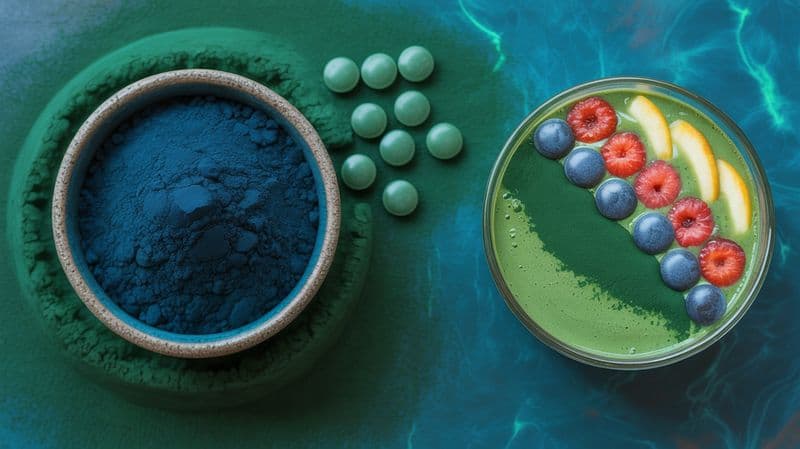
1. Powder
- Most versatile
- Mix into smoothies, juices, water
- Can add to energy balls, baked goods
- Least expensive per serving
2. Tablets/Capsules
- Convenient for travel
- No taste issues
- Pre-measured doses
- More expensive
3. Flakes
- Can sprinkle on salads, soups
- Easier to mix than powder
- Slightly different texture
Dosing Guidelines
General Health:
- Start: 1-3g (1/2 to 1 tsp) daily
- Standard: 3-5g (1-2 tsp) daily
- Therapeutic: 5-10g daily
- Maximum studied: 19g daily (safe)
Specific Conditions:
- High cholesterol: 4.5g daily
- Blood pressure: 4.5g daily
- Allergies: 2g daily
- Blood sugar: 2g daily
- Athletic performance: 6-7.5g daily
Important: Start low and increase gradually to assess tolerance.
Best Ways to Consume
In Smoothies (Hides Taste):
Green Detox Smoothie:
- 1 tsp spirulina powder
- 1 frozen banana
- 1/2 avocado
- 1 cup coconut water
- Handful of spinach
- 1/2 lemon, juiced
- 1/2 inch ginger
Berry Blast:
- 1 tsp spirulina
- 1 cup mixed berries
- 1 cup almond milk
- 1 tbsp almond butter
- 1 tsp honey (optional)
In Juices:
- Add 1 tsp to fresh vegetable juice
- Mix with pineapple or apple juice (masks flavor)
- Combine with lemon water for detox drink
In Foods:
- Energy balls: mix with dates, nuts, coconut
- Homemade protein bars
- Salad dressings
- Guacamole (adds color and nutrition)
- Pesto sauce
- Hummus
Straight:
- Mix 1 tsp in 4-6 oz water, shoot it back
- Follow with fruit or juice chaser
Taste Tips
Spirulina has a strong, earthy taste many find challenging. Strategies:
- Sweet + strong flavors: Pineapple, mango, mint
- Citrus: Lemon or lime juice
- Ginger: Fresh ginger overpowers spirulina taste
- Vanilla or cacao: In smoothies
- Start small: 1/4 tsp and work up
- Tablets: If you can't handle taste
Quality & Safety
Choosing High-Quality Spirulina
Look For:
- Organic certification
- Third-party tested for contaminants (heavy metals, microcystins)
- Grown in controlled environments (not wild-harvested)
- Dark blue-green color (indicates freshness)
- Reputable brands with transparent sourcing
Top Growing Locations:
- Hawaii (considered highest quality)
- California
- Taiwan
- China (varies in quality)
Avoid:
- Suspiciously cheap products
- Products without testing information
- Those claiming to treat/cure diseases
- Wild-harvested (risk of contamination)
Safety Considerations
Generally Safe For:
- Most adults and children
- Pregnant women (small amounts)
- Elderly individuals
- People with chronic conditions (consult doctor)
Use Caution If:
Autoimmune Conditions:
- Spirulina may stimulate immune system
- Could theoretically worsen autoimmune diseases
- Consult doctor before use
- Conditions: lupus, MS, rheumatoid arthritis
Phenylketonuria (PKU):
- Spirulina contains phenylalanine
- Must be avoided
Blood Clotting Disorders:
- Vitamin K content may affect blood thinners
- Consult doctor if taking warfarin
Allergies:
- Rare but possible allergic reactions
- Start with very small amount
Potential Side Effects
Mild (usually with high doses):
- Nausea
- Diarrhea or upset stomach
- Dizziness
- Headache
- Thirst
Solution: Reduce dose, take with meals, ensure good hydration
Detox Reactions:
- First few days may cause fatigue, headache
- Sign of detoxification
- Drink extra water, start with low dose
Drug Interactions
Possible Interactions:
- Immunosuppressants: May counteract effects
- Blood thinners: Vitamin K content
- Diabetes medications: May enhance blood sugar lowering
Always consult healthcare provider before adding spirulina if you take medications.
Comparing Spirulina to Other Greens
Spirulina vs. Chlorella
Similarities:
- Both are algae superfoods
- High in protein and chlorophyll
- Detoxification properties
Differences:
Spirulina:
- Higher protein (60-70%)
- More iron and B vitamins
- Contains phycocyanin (unique antioxidant)
- Easier to digest (no cell wall)
- Slightly better for energy
Chlorella:
- More chlorophyll (detox)
- Higher in vitamin A
- Contains CGF (chlorella growth factor)
- Better for heavy metal detox
- Supports liver function more
Verdict: Both are excellent! Can rotate or take together.
Spirulina vs. Wheatgrass
Spirulina:
- Complete protein
- More nutrients per gram
- Rich in B vitamins
- Better studied
Wheatgrass:
- Contains chlorophyll
- Good for digestion
- Energizing
- Less nutrient-dense
Special Applications
For Athletes
Benefits:
- Improves endurance
- Reduces exercise-induced oxidative stress
- Supports recovery
- Provides complete protein
Athletic Protocol:
- 6-7.5g daily
- Take 2 hours before workout
- Or split: half before, half after
For Detox
Detox Protocol (2-4 weeks):
- 5-10g spirulina daily
- Lots of water (at least 8 glasses)
- Support liver with milk thistle
- Eat fiber-rich foods
- Reduce toxin exposure (alcohol, processed foods)
For Vegans/Vegetarians
Why It's Great:
- Complete protein source
- High in iron
- Contains B12 (though form debated)
- Provides essential amino acids
Tip: Pair with vitamin C to enhance iron absorption
For Skin Health
Benefits:
- Antioxidants fight aging
- Supports collagen production
- Reduces acne and inflammation
- Detoxification improves skin clarity
Use:
- Internal: 3-5g daily
- External: Mix powder with yogurt or honey for face mask
The Environmental Impact
Why Spirulina Is Sustainable
Resource Efficiency:
- Uses 90% less water than meat
- Produces 20x more protein per acre than soybeans
- Can be grown in non-arable areas
- Fast-growing (doubles in 2-5 days)
Environmental Benefits:
- Produces oxygen through photosynthesis
- Can grow in brackish or alkaline water
- Doesn't require pesticides or herbicides
- Low carbon footprint
Future Food:
- Could help address world hunger
- Scalable and efficient
- Nutritionally complete
Recipes to Try
Spirulina Energy Balls
Ingredients:
- 1 cup dates, pitted
- 1/2 cup almonds
- 2 tbsp spirulina powder
- 2 tbsp coconut flakes
- 1 tbsp chia seeds
- Pinch sea salt
Directions:
- Blend dates and almonds in food processor
- Add spirulina, coconut, chia, salt
- Roll into balls
- Refrigerate 30 minutes
Green Goddess Smoothie Bowl
Ingredients:
- 1 frozen banana
- 1/2 avocado
- 1 tsp spirulina
- 1 cup coconut milk
- Handful spinach
- 1 tbsp hemp seeds
Toppings: Granola, berries, coconut, seeds
Directions:
- Blend all ingredients until thick and smooth
- Pour into bowl
- Add toppings
Spirulina Lemonade
Ingredients:
- 2 cups water
- Juice of 2 lemons
- 1 tsp spirulina
- 1-2 tbsp honey or maple syrup
- Mint leaves
Directions:
- Blend all ingredients
- Strain if desired
- Serve over ice
The Bottom Line
Spirulina is a nutritional powerhouse that delivers impressive health benefits with minimal calories. From boosting energy and immunity to supporting detoxification and heart health, this ancient superfood is backed by modern science.
Key Takeaways:
- Start with 1-3g daily and work up to 3-5g
- Choose organic, tested brands
- Mix into smoothies to mask taste
- Take consistently for best results
- Excellent for vegetarians, athletes, and anyone seeking optimal nutrition
Remember: While spirulina is incredibly nutritious, it's a supplement to—not a replacement for—a varied, whole-foods diet.
Add this vibrant green superfood to your routine and experience the vitality boost that has sustained humans for centuries!