The Ultimate Guide to Reducing Chronic Inflammation Naturally
Table of Contents
- What Is Chronic Inflammation?
- How Do You Know If You Have Chronic Inflammation?
- Root Causes of Chronic Inflammation
- The Anti-Inflammatory Diet: Your Foundation
- Power Anti-Inflammatory Supplements
- Lifestyle Strategies to Reduce Inflammation
- The 30-Day Anti-Inflammatory Reset Protocol
- Timeline: When Will You Feel Better?
- When to Seek Medical Help
- Key Takeaways
- References
The Ultimate Guide to Reducing Chronic Inflammation Naturally
Chronic inflammation has been called "the silent killer" by medical researchers. Unlike acute inflammation (your body's natural healing response to injury), chronic inflammation lingers for months or years, damaging healthy cells and contributing to virtually every modern disease.
What Is Chronic Inflammation?
Inflammation is your immune system's response to perceived threats. When you cut your finger or catch a cold, acute inflammation kicks in—sending white blood cells, cytokines, and other compounds to fight infection and heal tissue. This is healthy and necessary.
Chronic inflammation occurs when this response doesn't turn off. Your immune system remains on high alert, continuously releasing inflammatory chemicals that damage your own cells, tissues, and organs over time.
Diseases Linked to Chronic Inflammation:
How Do You Know If You Have Chronic Inflammation?
Common Symptoms:
Lab Tests That Measure Inflammation:
1. High-Sensitivity C-Reactive Protein (hs-CRP)
2. Erythrocyte Sedimentation Rate (ESR)
3. Interleukin-6 (IL-6)
4. Tumor Necrosis Factor-alpha (TNF-α)
Root Causes of Chronic Inflammation
1. Standard American Diet (SAD)
The biggest driver of chronic inflammation is our modern diet:
- Refined sugars and carbohydrates: Spike insulin and promote inflammatory cytokines
- Trans fats and oxidized oils: Found in fried foods and processed snacks
- Excess omega-6 fatty acids: Found in vegetable oils (soybean, corn, sunflower)
- Advanced Glycation End Products (AGEs): Formed when foods are cooked at high temperatures
2. Gut Dysbiosis
Your gut microbiome plays a central role in inflammation. An imbalanced gut (too many harmful bacteria, not enough beneficial ones) leads to:
3. Chronic Stress
Cortisol and other stress hormones, when chronically elevated, suppress immune function and promote inflammation. Studies show that psychological stress increases inflammatory markers like IL-6 and CRP by up to 30%.
4. Environmental Toxins
5. Sedentary Lifestyle
Physical inactivity is independently associated with elevated inflammatory markers. Exercise, even moderate walking, significantly reduces CRP and other inflammatory cytokines.
6. Poor Sleep
Sleep deprivation increases inflammatory signaling and impairs the body's ability to resolve inflammation. Even one night of poor sleep can elevate IL-6 and TNF-α.
7. Chronic Infections
Hidden infections can drive persistent inflammation:
The Anti-Inflammatory Diet: Your Foundation
Foods to Emphasize
1. Fatty Fish (3-4 times per week)
Rich in omega-3 fatty acids (EPA and DHA) that actively resolve inflammation:
Mechanism: Omega-3s compete with omega-6s for the same enzymes, producing anti-inflammatory prostaglandins instead of pro-inflammatory ones.
2. Colorful Vegetables (8-10 servings daily)
Packed with polyphenols and antioxidants that neutralize free radicals:
3. Berries (1-2 cups daily)
Highest antioxidant content of any fruit:
4. Herbs and Spices (Use liberally)
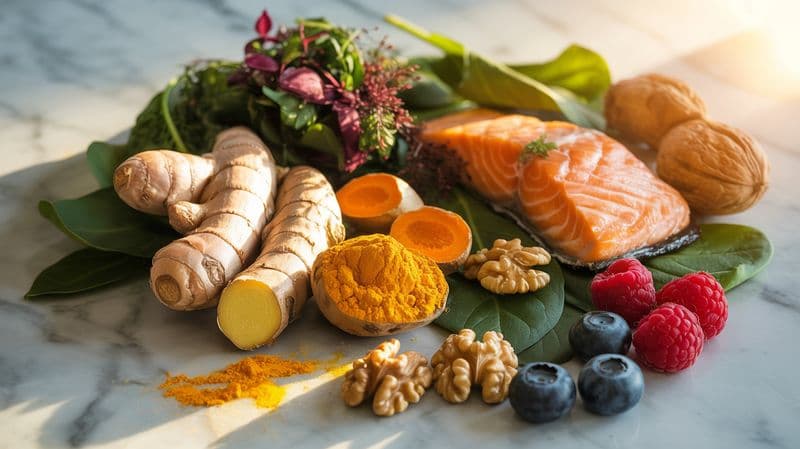
- Turmeric: Contains curcumin, one of the most powerful natural anti-inflammatories (comparable to ibuprofen in some studies)
- Ginger: Contains gingerols that inhibit COX and LOX enzymes
- Garlic: Contains allicin with broad anti-inflammatory effects
- Cinnamon: Reduces inflammatory markers and blood sugar
- Rosemary: Rich in carnosic acid, a potent antioxidant
5. Healthy Fats
6. Green Tea
Contains EGCG, a catechin that suppresses inflammatory pathways. Drink 2-3 cups daily.
Foods to Avoid or Minimize
1. Refined Sugars and Carbohydrates
2. Industrial Seed Oils
3. Trans Fats
4. Processed Meats
5. Excess Alcohol
More than 1-2 drinks per day increases inflammatory markers
6. High-Glycemic Foods
Power Anti-Inflammatory Supplements
1. Turmeric (Curcumin) with Black Pepper
Dosage: 500-2000mg daily of a standardized extract (95% curcuminoids)
Why it works: Curcumin inhibits NF-κB, the master switch for inflammation. Black pepper (piperine) increases absorption by 2000%.
Evidence: Over 10,000 published studies. Multiple trials show efficacy comparable to NSAIDs for arthritis pain without side effects.
2. Omega-3 Fatty Acids (EPA/DHA)
Dosage: 2-4 grams daily (combined EPA+DHA)
Why it works: Converted into resolvins and protectins that actively resolve inflammation
Evidence: Meta-analyses show significant reductions in CRP, IL-6, and TNF-α
3. Ginger Root Extract
Dosage: 1-3 grams daily
Why it works: Gingerols and shogaols inhibit COX-2 and lipoxygenase enzymes
Evidence: Multiple studies show efficacy for osteoarthritis and exercise-induced muscle soreness
4. Spirulina and Chlorella
Dosage: 3-5 grams daily
Why it works: Rich in phycocyanin, a powerful antioxidant that inhibits COX-2
Evidence: Studies show reductions in lipid peroxidation and inflammatory cytokines
5. Vitamin D3
Dosage: 5,000-10,000 IU daily (test levels first)
Why it works: Vitamin D is a powerful immune modulator. Deficiency is strongly associated with elevated CRP
Target level: 50-80 ng/mL
6. Probiotics
Dosage: 10-50 billion CFU daily (multi-strain)
Why it works: Healthy gut bacteria produce short-chain fatty acids (SCFAs) that have potent anti-inflammatory effects
7. Quercetin
Dosage: 500-1000mg daily
Why it works: Inhibits histamine release and stabilizes mast cells
Found in: Onions, apples, capers, berries
8. Boswellia (Indian Frankincense)
Dosage: 300-500mg 3x daily
Why it works: Contains boswellic acids that inhibit 5-lipoxygenase (5-LOX)
Evidence: Effective for osteoarthritis and inflammatory bowel disease
Lifestyle Strategies to Reduce Inflammation
1. Exercise (The Right Amount)
- Moderate exercise reduces inflammation: 30-45 minutes of moderate activity (brisk walking, cycling, swimming) 5 days per week
- Excessive exercise increases inflammation: Overtraining elevates cortisol and inflammatory cytokines
- Strength training: 2-3 sessions per week. Muscle produces myokines that have anti-inflammatory effects
2. Stress Management
Chronic stress is one of the biggest drivers of inflammation. Effective strategies:
- Meditation: 10-20 minutes daily. Studies show significant reductions in CRP and IL-6
- Deep breathing: 5 minutes of diaphragmatic breathing activates the parasympathetic nervous system
- Nature exposure: 20 minutes in nature reduces cortisol by 20%
- Yoga: Combines movement, breathing, and meditation
3. Optimize Sleep
- Target: 7-9 hours per night
- Consistency: Go to bed and wake at the same time daily
- Environment: Dark, cool (65-68°F), quiet
- Avoid: Blue light 2 hours before bed, caffeine after 2pm
4. Cold Exposure
- Cold showers: 1-3 minutes daily
- Ice baths: 10-15 minutes 2-3x per week
- Mechanism: Activates brown adipose tissue, reduces inflammatory cytokines
5. Sauna Therapy
- Infrared sauna: 20-30 minutes, 3-4x per week
- Benefits: Increases heat shock proteins that protect against oxidative stress
- Evidence: Regular sauna use reduces CRP by 40%
6. Intermittent Fasting
- 16:8 method: Fast for 16 hours, eat within 8-hour window
- Mechanism: Fasting triggers autophagy, clearing out damaged cells and proteins
- Evidence: Studies show significant reductions in inflammatory markers after 8 weeks
The 30-Day Anti-Inflammatory Reset Protocol
Week 1: Elimination Phase
Diet: Remove all inflammatory foods (sugar, refined carbs, seed oils, alcohol, dairy, gluten)
Supplements: Start turmeric (1000mg 2x daily) and omega-3s (2g daily)
Lifestyle: Begin 10 minutes of meditation daily
Week 2: Gut Healing
Diet: Continue elimination, add fermented foods (sauerkraut, kimchi, kefir)
Supplements: Add probiotic (25 billion CFU), digestive enzymes with meals
Lifestyle: Add 30 minutes of walking daily
Week 3: Deep Anti-Inflammatory Support
Diet: Maintain clean diet, increase vegetable intake to 8-10 servings
Supplements: Add ginger (1g daily), quercetin (500mg 2x daily)
Lifestyle: Add sauna or cold exposure 2-3x weekly
Week 4: Reintroduction & Assessment
Diet: Carefully reintroduce foods one at a time (every 3 days)
Supplements: Continue all supplements
Lifestyle: Establish sustainable routine
Testing: Retest hs-CRP and other inflammatory markers
Timeline: When Will You Feel Better?
- Days 3-5: Initial withdrawal symptoms (headaches, fatigue, irritability)
- Week 1: Energy starts to stabilize, less bloating
- Week 2: Pain and stiffness begin to improve, better sleep
- Week 3: Significant improvements in energy, mental clarity
- Week 4-8: Sustained symptom relief, lab markers improve
- 3-6 months: Maximum benefit, especially for autoimmune conditions
When to Seek Medical Help
While natural approaches are powerful, certain situations require medical intervention:
Key Takeaways
1. Chronic inflammation is the root cause of most modern diseases
2. Diet is the most powerful tool—emphasize anti-inflammatory foods, eliminate inflammatory ones
3. Key supplements: Turmeric, omega-3s, ginger, spirulina
4. Lifestyle factors matter: exercise, stress management, sleep, cold/heat exposure
5. Give it time—meaningful improvements take 4-8 weeks
6. Test your markers (hs-CRP) to track progress objectively
References
1. Calder, P. C. (2017). Omega-3 fatty acids and inflammatory processes. *Nutrients*, 9(1), 43.
2. Hewlings, S. J., & Kalman, D. S. (2017). Curcumin: A review of its effects on human health. *Foods*, 6(10), 92.
3. Furman, D., et al. (2019). Chronic inflammation in the etiology of disease across the life span. *Nature Medicine*, 25(12), 1822-1832.
4. Pahwa, R., et al. (2023). Chronic Inflammation. *StatPearls*. NCBI Bookshelf.
5. Minihane, A. M., et al. (2015). Low-grade inflammation, diet composition and health. *British Journal of Nutrition*, 114(7), 999-1012.
Dr. Lamont Williams
Healthcare professional and wellness expert with over 15 years of experience in natural medicine and holistic health. Passionate about empowering people to take control of their health through evidence-based natural remedies.